
Securing funding is a pivotal moment for any burgeoning business. Venture capital, a powerful engine of growth for innovative startups, offers a lifeline but requires understanding its intricacies. This exploration delves into the multifaceted world of venture capital, examining its processes, stages, and the crucial decisions that shape a company’s trajectory. From initial seed funding to later-stage investments, we’ll unravel the complexities of securing this crucial capital and navigating the unique challenges involved.
We will cover the various stages of funding, from seed rounds to Series A, B, and beyond, illustrating how these investments fuel a company’s expansion. The due diligence process, crucial for both startups and investors, will be explained, along with the essential components of a compelling pitch deck. Furthermore, we’ll analyze the different types of venture capital firms, their investment strategies, and the critical valuation and deal terms that define the partnership.
Finally, we’ll explore the various exit strategies available, including IPOs and acquisitions, and the factors that contribute to successful exits.
Venture Capital Basics
Venture capital (VC) is a crucial source of funding for high-growth, high-risk startups. It involves investing in companies with significant potential for substantial returns, often in exchange for equity. VC firms typically pool capital from institutional investors, high-net-worth individuals, and corporations, then strategically allocate these funds to promising ventures. The process is inherently risky, but the potential rewards are substantial, driving the pursuit of innovative and disruptive businesses.Venture capital funding operates on the principle of asymmetric returns.
A small number of highly successful investments can generate returns that offset numerous failed ventures. This high-risk, high-reward dynamic necessitates rigorous due diligence and a deep understanding of the market and the target company’s potential. VC firms actively participate in the management and growth of their portfolio companies, providing not just capital but also mentorship, industry connections, and strategic guidance.
Stages of Venture Capital Funding
Venture capital funding typically occurs in distinct stages, each characterized by different investment amounts, company maturity, and investor expectations. The most common stages include seed funding, Series A, Series B, Series C, and beyond. Seed funding provides initial capital for product development and market validation. Series A funding typically follows successful product-market fit and is used for scaling operations and expanding the team.
Subsequent series (B, C, etc.) usually support further expansion, market penetration, and potential acquisitions. The exact amount and purpose of each round vary significantly depending on the company’s progress, market conditions, and investor appetite.
Examples of Venture-Backed Companies
Many successful companies have relied on venture capital to fuel their growth. Consider Airbnb, which secured significant funding through various series rounds, ultimately becoming a global hospitality giant. Similarly, SpaceX, known for its innovative space exploration technologies, has received substantial VC investment, propelling its ambitious projects forward. These examples highlight the transformative power of venture capital in shaping the landscape of technology and innovation.
The funding journeys of these companies involved multiple rounds of financing, showcasing the iterative nature of VC investment and the importance of consistent performance and market validation to secure further funding.
Comparison of Angel Investors and Venture Capitalists
| Investor Type | Investment Amount | Investment Stage | Risk Tolerance |
|---|---|---|---|
| Angel Investor | $25,000 – $1 million | Seed, Early Stage | High |
| Venture Capitalist | $1 million – $100 million+ | Series A and beyond | High, but with more due diligence and portfolio diversification |
The Venture Capital Process for Startups
Securing venture capital funding is a multifaceted process requiring meticulous planning, compelling presentation, and a robust understanding of the VC landscape. Startups must navigate a series of steps, from initial outreach to securing investment, while venture capitalists conduct rigorous due diligence to assess the investment’s viability and potential for significant returns.
Steps a Startup Takes to Secure Venture Capital Funding
The journey to securing venture capital funding typically involves several key stages. Initially, startups often begin by building a strong network within the industry, attending industry events, and leveraging personal connections to connect with potential investors. This initial networking phase is crucial for gaining visibility and establishing credibility. Following this, startups typically develop a comprehensive business plan and a compelling pitch deck to showcase their vision, market analysis, team expertise, and financial projections.
This detailed presentation serves as the foundation for attracting investor interest. Then comes the pitching process itself, where startups present their pitch deck to potential investors, aiming to secure a meeting and subsequent investment. After a successful pitch, negotiations begin, focusing on valuation, investment terms, and the overall structure of the deal. Finally, once terms are agreed upon, legal documentation is finalized, and the funding is disbursed.
This entire process can take several months, or even years, depending on the startup’s readiness and market conditions.
The Venture Capital Due Diligence Process
Once a venture capitalist expresses interest, a thorough due diligence process commences. This involves a deep dive into the startup’s business model, market analysis, financial projections, and team capabilities. The VC firm will scrutinize the startup’s financial statements, conduct customer interviews to validate market demand, assess the competitive landscape, and investigate the intellectual property landscape. Legal and regulatory compliance will also be examined, including contracts, licenses, and any potential legal risks.
Technical due diligence may be conducted to evaluate the technology’s feasibility and scalability. This comprehensive review aims to mitigate risks and validate the startup’s potential for success, ensuring the investment aligns with the VC firm’s investment thesis and risk tolerance. For example, a VC might request access to sales data, customer acquisition costs, and churn rates to assess the business’s overall financial health and sustainability.
Key Elements of a Compelling Pitch Deck
A compelling pitch deck is crucial for capturing the attention of venture capitalists. It should concisely and persuasively communicate the startup’s value proposition, market opportunity, and team expertise. Key elements include a clear and concise executive summary outlining the problem, solution, and market opportunity; a detailed market analysis demonstrating market size, target audience, and competitive landscape; a description of the business model, including revenue streams and cost structure; a presentation of the team’s experience and expertise; and finally, a compelling financial projection illustrating revenue growth, profitability, and key financial metrics.
Visual aids, such as charts and graphs, should be used to enhance understanding and engagement. A strong narrative, showcasing the startup’s vision and passion, is also essential to leave a lasting impression on potential investors. For instance, a successful pitch deck might include a case study demonstrating early traction or a strong customer testimonial.
Sample Term Sheet: Key Clauses and Considerations
A term sheet is a non-binding agreement outlining the key terms of a venture capital investment. It serves as a roadmap for the final legal agreement. Key clauses typically include the investment amount, valuation, equity stake, liquidation preference (which determines the order in which investors receive proceeds in case of a sale or liquidation), anti-dilution protection (protecting investors from future equity dilution), board representation (allocating seats on the startup’s board of directors), and vesting schedule (the timeline for equity grants to founders and employees).
Other important considerations might involve protective provisions, such as information rights, and exit strategy clauses. For example, a term sheet might stipulate a liquidation preference of 1x, meaning investors would receive their initial investment back before common shareholders receive anything in a liquidation event. Negotiating these terms is critical, as they significantly impact the startup’s future and the investor’s return on investment.
Types of Venture Capital Firms
Venture capital firms aren’t a monolithic entity; they vary significantly in their investment strategies, target companies, and overall approach. Understanding these differences is crucial for entrepreneurs seeking funding, as the right fit can significantly impact a startup’s trajectory. This section will explore the key distinctions between various types of venture capital firms.
The landscape of venture capital is diverse, with firms specializing in different stages of company development and possessing unique investment philosophies. This specialization allows for a more focused and effective approach to investing, aligning the firm’s expertise with the specific needs of the businesses they fund.
Early-Stage Venture Capital Firms
Early-stage venture capital firms focus on investing in seed-stage and Series A companies. These are businesses that are typically just beginning to develop their product or service and have limited revenue. These firms are often willing to take on more risk in exchange for a larger potential return. They provide not only capital but also mentorship and guidance, helping startups navigate the challenges of early growth.
Investments are often smaller in size compared to later-stage funding, reflecting the higher risk and uncertainty associated with early-stage companies. Examples include firms like Y Combinator, known for its accelerator program and early investments in companies like Airbnb and Dropbox. Their investment strategy prioritizes identifying disruptive technologies and high-growth potential, even if the business model is still unproven.
Growth Equity Firms
Growth equity firms invest in more mature companies that have already achieved significant traction and revenue. These firms typically invest larger sums of money than early-stage firms, and they often focus on helping companies scale their operations and expand into new markets. They seek to capitalize on established market positions and proven business models, prioritizing companies with a demonstrated ability to generate revenue and a clear path to profitability.
Unlike early-stage investors who often take a more hands-on approach, growth equity firms tend to have a more passive role, offering strategic guidance but generally leaving day-to-day operations to management. Examples include firms like Sequoia Capital, known for its investments in established tech giants like Google and Apple, often at later stages of their growth. Their investment strategy focuses on maximizing returns through strategic expansion and market dominance.
Corporate Venture Capital (CVC) Firms
Corporate venture capital firms are investment arms of larger corporations. They invest in startups that are strategically aligned with their parent company’s business interests. This alignment can take many forms, from providing access to distribution channels and customers to leveraging complementary technologies. CVC firms often have a longer-term perspective than traditional venture capital firms, as their primary goal is not just financial returns but also strategic benefits for the parent company.
For example, a large technology company might invest in a startup developing AI software that complements its existing product offerings. This strategy allows the corporation to gain early access to innovative technologies, potentially avoiding costly acquisitions later on. Their investment approach is often less focused on pure financial returns and more on strategic synergies and long-term market positioning.
Comparison of Venture Capital Firm Types
The following table summarizes the key differences between these three types of venture capital firms:
| Venture Capital Firm Type | Typical Investment Stage | Investment Size | Investment Focus | Level of Involvement |
|---|---|---|---|---|
| Early-Stage | Seed, Series A | Smaller | High-growth potential, disruptive technologies | High (mentorship, guidance) |
| Growth Equity | Series B, C, and beyond | Larger | Scalability, market expansion, proven business models | Moderate (strategic guidance) |
| Corporate Venture Capital (CVC) | Varies | Varies | Strategic alignment with corporate parent | Varies (can range from high to low) |
Valuation and Deal Terms
Securing venture capital funding involves a complex negotiation process, central to which is the valuation of the startup and the terms of the investment agreement. Understanding these aspects is crucial for both entrepreneurs and investors to ensure a mutually beneficial partnership. The valuation process determines the company’s worth, impacting the equity stake investors receive in exchange for their capital.
Deal terms, on the other hand, define the rights and responsibilities of both parties throughout the investment period and beyond.Determining a startup’s valuation is not an exact science. It involves a multifaceted assessment considering factors such as the company’s revenue, growth trajectory, market size, competitive landscape, management team, and intellectual property. Common valuation methods include discounted cash flow (DCF) analysis, comparable company analysis, and precedent transactions.
However, for early-stage startups with limited or no revenue, valuation often relies heavily on future potential and market projections, introducing a significant degree of uncertainty and reliance on investor judgment. A significant role is played by the negotiation between the entrepreneur and the investor; the final valuation reflects a compromise reflecting the perceived risk and potential reward.
Startup Valuation Methods
Several methods are employed to determine a startup’s valuation. Discounted Cash Flow (DCF) analysis projects future cash flows and discounts them back to their present value, providing a theoretical valuation based on the company’s predicted earnings. Comparable company analysis compares the startup to publicly traded or recently acquired companies in the same industry, using their valuation multiples (such as Price-to-Earnings or Price-to-Sales ratios) to estimate the startup’s worth.
Precedent transactions examine similar funding rounds in comparable companies to provide a benchmark for the valuation. For early-stage companies, a combination of these methods, often heavily weighted towards future potential and market size estimations, is commonly used. The resulting valuation is often a range rather than a precise figure. For instance, a company projecting significant growth in a large market might receive a higher valuation than a company with similar current revenue but limited growth prospects, even if the current revenue is higher.
Common Terms and Conditions in Venture Capital Funding Agreements
Venture capital funding agreements are legally binding contracts outlining the terms of the investment. Key provisions often include the amount of funding, the valuation of the company, the equity stake granted to the investor, the investor’s rights (such as board representation and veto rights), liquidation preferences, anti-dilution protection, and exit strategies. Liquidation preferences, for example, specify the order in which investors and founders receive proceeds in the event of a sale or liquidation of the company.
Anti-dilution protection safeguards investors’ equity stake in case of subsequent funding rounds at lower valuations.
Equity Financing Structures
Several equity financing structures are employed in venture capital deals. Preferred stock is a common structure granting investors preferential rights over common stockholders, such as liquidation preferences and participation rights. Common stock represents ownership in the company without preferential rights. Convertible notes are debt instruments that convert into equity at a future date, often used in early-stage funding rounds to avoid immediate valuation discussions.
Each structure offers different benefits and risks to both investors and founders, and the choice depends on the stage of the company, the risk tolerance of the parties, and the negotiation outcome. For example, a convertible note allows a company to secure funding without committing to a specific valuation early on, while preferred stock offers investors greater protection and control.
The choice between these structures depends on the specific circumstances of each deal and the risk appetite of both the investor and the entrepreneur.
Exit Strategies for Venture Capital Investments
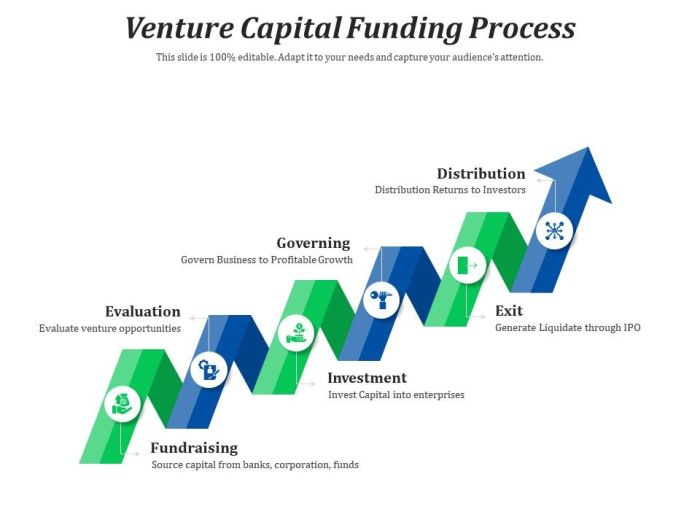
Venture capital investments are inherently risky, but the potential for high returns attracts investors. The ultimate goal for a venture capitalist is a successful exit, which allows them to realize their investment and generate a profit. Several strategies exist for achieving this, each with its own advantages and disadvantages. The choice of exit strategy often depends on the specific circumstances of the company and the market conditions.Successful exits represent a culmination of years of effort, strategic decision-making, and, often, a significant amount of luck.
Understanding the various exit paths available is crucial for both venture capitalists and entrepreneurs.
Initial Public Offerings (IPOs)
An IPO involves taking a privately held company public by issuing shares on a stock exchange. This allows venture capitalists to sell their shares to the public, realizing their investment. A successful IPO requires a company with strong financials, a compelling growth story, and a favorable market environment. The process is rigorous, involving regulatory filings and significant investor relations efforts.
For example, the IPO of Google in 2004 was a landmark event, generating substantial returns for its early investors. The factors contributing to its success included the company’s innovative technology, strong market position, and a high level of investor demand. Another notable example is Facebook’s IPO in 2012, although its initial performance was somewhat volatile, it eventually became a highly successful investment for many early backers.
Acquisitions
Acquisition by another company is a common exit strategy. This can involve a sale to a larger company in the same industry (strategic acquisition) or to a private equity firm (financial acquisition). Strategic acquisitions often occur when a larger company seeks to expand its market share, acquire valuable technology, or gain access to new talent. Financial acquisitions typically focus on maximizing the value of the acquired company through operational improvements and cost reductions.
The acquisition of Instagram by Facebook in 2012 for approximately $1 billion is a prime example of a successful acquisition, providing significant returns for Instagram’s investors. The factors contributing to this success included Instagram’s rapid user growth, its strong brand recognition, and its strategic fit with Facebook’s existing social media platform.
Liquidity Events
Liquidity events are instances where investors can convert their investments into cash. IPOs and acquisitions are the most common liquidity events in venture capital, providing investors with the opportunity to realize their returns. The timing of a liquidity event is crucial, as it directly impacts the overall return on investment. A premature exit might result in lower returns, while delaying the exit too long could expose the investment to unforeseen risks.
The importance of liquidity events cannot be overstated; they are the primary mechanism by which venture capitalists generate profits and demonstrate the success of their investment strategy. Without successful liquidity events, the venture capital model would be unsustainable.
Travel Hacks
Budget travel doesn’t have to mean sacrificing a great experience. With a little planning and resourcefulness, you can explore the world without breaking the bank. This section focuses on practical tips and tricks to help you stretch your travel budget further and maximize your enjoyment.
Five Effective Travel Hacks for Budget Travelers
Careful budgeting and smart choices are crucial for cost-effective travel. The following hacks will help you save money on common travel expenses.
- Travel during the off-season or shoulder season: Flights and accommodations are significantly cheaper during these periods, avoiding peak tourist times. For example, visiting popular European destinations in the spring or fall can save you hundreds of dollars compared to summer travel.
- Utilize budget airlines and transportation: Consider budget airlines, which often offer lower fares but may have additional fees for baggage. For ground transportation, explore public transport options like buses and trains, which are usually cheaper than taxis or ride-sharing services. Researching local bus routes in advance can save you significant amounts compared to relying on taxis.
- Embrace free activities: Many cities offer free walking tours, museums with free admission days, and parks perfect for picnics. Researching free activities beforehand can greatly reduce your entertainment costs. For example, many major cities have free walking tours that provide a great overview of the city’s history and culture.
- Cook your own meals: Eating out every meal can quickly drain your budget. Staying in accommodations with kitchen facilities allows you to prepare some of your meals, significantly reducing food costs. Even simple meals prepared in your accommodation can save you a considerable amount compared to restaurant meals.
- Take advantage of free Wi-Fi: Avoid expensive roaming charges by utilizing free Wi-Fi hotspots available at cafes, libraries, and hotels. Many airports also offer free Wi-Fi, allowing you to stay connected while traveling without incurring additional costs.
Five Travel Hacks for Maximizing Time During a Short Trip
Short trips require efficient planning to make the most of your limited time. These strategies help you pack more experiences into a shorter timeframe.
- Plan your itinerary in advance: Researching attractions and transportation options beforehand helps you avoid wasted time figuring things out on the go. This allows for a smoother travel experience and efficient use of your time.
- Prioritize your must-see attractions: Focus on the most important sights and activities to ensure you don’t miss out on the highlights. This prevents you from feeling overwhelmed by trying to do too much in a short period.
- Utilize efficient transportation: Choose the fastest and most convenient modes of transportation to minimize travel time between locations. This includes using public transportation or pre-booked taxis rather than relying on slower options.
- Pack light: Packing only essential items reduces the time spent packing and unpacking, and makes moving between locations easier and faster. This streamlined approach minimizes travel time and maximizes your sightseeing time.
- Embrace spontaneity, but with a plan: While it’s good to have a plan, leave some room for spontaneity. However, having a general framework will prevent you from wasting valuable time aimlessly wandering.
Travel Insurance (related topic)
Travel insurance provides financial protection and assistance during unexpected events while traveling. It’s a crucial consideration for any trip, regardless of length or destination, mitigating potential risks and financial burdens. Understanding the various types of coverage and their importance is key to making an informed decision.Travel insurance policies vary significantly in their coverage offerings. The level of protection offered depends on the specific policy and the premium paid.
A comprehensive understanding of these options is crucial for choosing the right coverage.
Types of Travel Insurance Coverage
Different travel insurance policies offer a range of coverage options. Common types include trip cancellation or interruption insurance, medical expense coverage, emergency medical evacuation, baggage loss or delay coverage, and travel delay coverage. Trip cancellation insurance reimburses prepaid, non-refundable trip costs if the trip is canceled due to covered reasons, such as illness or a natural disaster. Medical expense coverage helps pay for medical treatment and hospitalization incurred during the trip.
Emergency medical evacuation covers the cost of transporting an insured person to a suitable medical facility, often in cases of serious illness or injury. Baggage loss or delay coverage compensates for lost, stolen, or delayed luggage. Finally, travel delay coverage reimburses expenses incurred due to unexpected delays, such as missed connections or flight cancellations. Some policies may also include additional benefits like 24/7 emergency assistance, legal assistance, and even coverage for lost personal belongings.
Importance of Travel Insurance for Various Travel Scenarios
Travel insurance proves invaluable across a range of travel scenarios. For example, unexpected medical emergencies abroad can lead to exorbitant medical bills. Travel insurance can significantly alleviate the financial burden of such situations. Similarly, trip cancellations due to unforeseen circumstances, like severe weather or family emergencies, can result in substantial financial losses; trip cancellation insurance helps mitigate these losses.
Furthermore, lost or stolen luggage can disrupt a trip and incur unexpected expenses for replacements; baggage coverage protects against these costs. Finally, significant travel delays can cause considerable inconvenience and additional expenses; travel delay insurance can provide some financial relief. The importance of travel insurance is particularly heightened for international travel, where medical costs and other unforeseen expenses can be significantly higher.
Consider a scenario where a traveler falls ill and requires emergency medical evacuation from a remote location; the cost of such an evacuation could easily reach tens of thousands of dollars. Travel insurance would cover a substantial portion, if not all, of these costs.
Essential Considerations When Choosing Travel Insurance
Choosing the right travel insurance policy requires careful consideration of several factors. Firstly, evaluate the level of coverage needed based on the trip’s length, destination, and activities planned. A longer trip or one involving high-risk activities would require more comprehensive coverage. Secondly, compare policies from different insurers to find the best value for money. Look at the specific inclusions and exclusions of each policy.
Thirdly, review the policy’s terms and conditions carefully, paying attention to any limitations or exclusions. For instance, some policies may exclude pre-existing medical conditions. Fourthly, ensure the insurer is reputable and financially stable. Fifthly, check for customer reviews and ratings to gauge the insurer’s reliability and responsiveness in handling claims. Finally, consider purchasing travel insurance early in the trip planning process to ensure adequate coverage.
A comprehensive checklist should include: assessing trip details (duration, destination, activities), comparing policy options from multiple insurers, understanding policy exclusions, verifying insurer reputation, checking customer reviews, and securing the policy well in advance of the trip.
Travel Photography
Travel photography offers a unique opportunity to capture the essence of a place and create lasting memories. Mastering various techniques and understanding post-processing can elevate your travel photos from snapshots to stunning visual narratives. This section explores techniques for capturing compelling images in diverse lighting conditions and offers tips for enhancing their visual appeal through editing.Capturing stunning travel photos requires adaptability and a keen eye for detail, regardless of the lighting conditions.
Understanding how light interacts with your subject is crucial.
Techniques for Capturing Stunning Travel Photos in Various Lighting Conditions
Golden hour, the period shortly after sunrise and before sunset, provides soft, warm light ideal for portraits and landscapes. The soft light minimizes harsh shadows, creating a flattering and romantic ambiance. Conversely, harsh midday sun can create strong contrasts and deep shadows, often resulting in washed-out highlights and dark, unappealing shadows. To mitigate this, seek shade, use a fill flash to brighten shadows, or shoot from a lower angle to utilize the sun’s reflection.
Overcast days offer diffused light, ideal for capturing even lighting across your subjects without harsh shadows, making it perfect for landscapes and architectural photography. Night photography presents its own set of challenges and rewards. Long exposure techniques, utilizing a tripod and a low ISO setting, can capture the vibrant lights of a city or the mesmerizing stars of a clear night sky.
Experimentation with different shutter speeds and aperture settings will be key to mastering this.
Editing Travel Photos to Enhance Visual Appeal
Post-processing plays a crucial role in transforming your travel photos. Basic adjustments such as cropping, straightening, and adjusting brightness and contrast are fundamental. More advanced techniques include color grading to create a consistent mood and style across your images, and selectively adjusting highlights and shadows to bring out details. Tools like Adobe Lightroom and Photoshop offer extensive capabilities for enhancing images.
However, it is crucial to maintain a natural look and avoid over-processing, which can make images appear artificial. A subtle and tasteful approach is key to showcasing the beauty of your travel destinations without sacrificing realism.
Essential Photography Equipment for Travel
Choosing the right equipment is essential for capturing high-quality travel photos. Consider portability and durability when making your selections.
- A versatile camera: A mirrorless camera or a high-quality DSLR offers flexibility and image quality.
- Wide-angle lens: Capture expansive landscapes and architectural details.
- Telephoto lens: Ideal for wildlife photography or capturing distant subjects.
- Tripod: Essential for sharp images in low-light conditions and long exposures.
- Portable charger: Ensure you have enough power for your devices.
- Extra memory cards: Avoid running out of space during your trip.
- Cleaning kit: Keep your lenses and camera sensor clean.
Travel Tips (related topic)
Planning your first international trip can be exciting but also overwhelming. Careful preparation and a few key strategies can significantly enhance your experience and minimize stress. This section provides essential tips for both first-time international travelers and for packing efficiently.
Essential Travel Tips for First-Time International Travelers
These five tips address common concerns and challenges faced by novice international travelers, ensuring a smoother and more enjoyable journey.
- Visa and Passport Requirements: Confirm visa requirements well in advance of your trip. Passport validity should extend beyond your travel dates by at least six months. Check the specific requirements for your destination country on their embassy or consulate website.
- Travel Insurance: Comprehensive travel insurance is crucial. It protects against unexpected events such as medical emergencies, trip cancellations, lost luggage, and more. Choose a policy that aligns with your trip’s specifics and budget.
- Currency Exchange: Exchange currency before your departure or use a reputable ATM at your destination to avoid unfavorable exchange rates at airports or tourist areas. Inform your bank about your travel plans to avoid card blocks.
- Local Customs and Etiquette: Research the local customs and etiquette of your destination. Understanding cultural norms will help you avoid unintentional offenses and enhance your interactions with locals. Simple gestures like learning basic phrases in the local language can go a long way.
- Emergency Contacts and Copies of Documents: Keep a copy of your passport, visa, travel insurance information, and other important documents in a separate location from the originals. Share your itinerary and emergency contact information with a trusted person at home.
Efficient Packing Tips for a Trip
Packing efficiently saves space, reduces weight, and minimizes stress. These tips help you pack strategically and only bring essential items.
- Create a Packing List: A detailed packing list helps you stay organized and avoid forgetting essential items. Categorize items by clothing, toiletries, electronics, and documents.
- Roll Your Clothes: Rolling clothes instead of folding them saves space and minimizes wrinkles. This technique is particularly useful for soft materials like t-shirts and jeans.
- Choose Versatile Clothing: Opt for versatile clothing items that can be mixed and matched to create multiple outfits. Neutral colors are easier to coordinate.
- Use Packing Cubes: Packing cubes help organize your luggage and compress clothing, maximizing space and making it easier to find items. They also help separate clean and dirty clothes.
- Wear Your Bulkiest Items: Wear your heaviest and bulkiest items, such as boots or a jacket, on the plane to save space in your luggage.
Travel Packing List for a Week-Long Trip
This sample packing list categorizes items for easy reference and organization. Adjust it based on your specific needs and destination.
| Clothing | Toiletries | Electronics |
|---|---|---|
| 7 shirts | Toothbrush, toothpaste | Phone, charger |
| 4 pairs of pants/shorts | Shampoo, conditioner | Laptop (optional), charger |
| 3 pairs of underwear | Soap, body wash | Camera (optional), charger |
| 2 pairs of socks | Deodorant | Headphones |
| 1 light jacket | Sunscreen | Portable power bank |
| 1 pair of comfortable shoes | Medications (if needed) | Adapter (if needed) |
| Pajamas | First-aid kit | E-reader (optional) |
Travel Visa (related topic)
Securing the appropriate travel visa is a crucial step in international travel. The process varies significantly depending on your citizenship, your destination country, and the purpose of your visit. Understanding the requirements and procedures involved is essential to ensure a smooth and successful trip.The process of obtaining a travel visa generally involves completing an application form, gathering necessary supporting documents, submitting the application, attending an interview (if required), and paying applicable fees.
The timeframe for processing can range from a few days to several months, depending on the country and the volume of applications. Careful planning and early application are strongly recommended.
Visa Application Requirements
A successful visa application hinges on providing complete and accurate documentation. Missing or inaccurate information can lead to delays or rejection. The specific requirements vary greatly by country, but some common documents include a valid passport, completed application form, passport photos, proof of sufficient funds, travel itinerary, and proof of accommodation. Some countries may also require a letter of invitation, proof of employment, or other supporting documentation depending on the purpose of the visit.
Types of Visas
Visas are categorized based on the purpose of travel. Tourist visas are for leisure travel, while business visas are for work-related trips. Student visas are for educational purposes, and work visas allow individuals to work in a foreign country. Each visa type has its own specific requirements and application process. For example, a tourist visa might require proof of return travel and sufficient funds for the duration of the stay, while a work visa necessitates a job offer from an employer in the destination country.
The Visa Application Process: A Step-by-Step Guide
The steps involved in applying for a visa typically include: 1. Determining the appropriate visa type based on your travel purpose. 2. Gathering all the required documents, ensuring they meet the specified criteria. 3.
Completing the visa application form accurately and completely. 4. Submitting the application and all supporting documents to the relevant embassy or consulate. 5. Attending an interview (if required).
6. Paying the visa application fee. 7. Tracking the application status and collecting the visa once approved.
Visa Application Checklist
It is highly advisable to create a checklist to ensure you have all the necessary documents. This checklist should be tailored to the specific requirements of your destination country and the type of visa you are applying for. However, a general checklist might include:
- Valid passport with at least six months validity remaining
- Completed visa application form
- Passport-sized photographs meeting specific requirements
- Proof of sufficient funds (bank statements, credit card statements)
- Travel itinerary (flight bookings, hotel reservations)
- Proof of accommodation (hotel confirmation, invitation letter)
- Travel insurance policy
- Letter of invitation (if required)
- Proof of employment (employment letter, payslips)
- Visa application fee payment
Remember to always check the specific requirements on the official website of the embassy or consulate of your destination country. Requirements can change frequently, so verifying the latest information before starting your application is crucial.
Urban Escapes (related topic)
Urban escapes offer a refreshing change of pace, allowing individuals to explore the vibrant culture and hidden gems of cities worldwide. These getaways provide opportunities for both relaxation and adventure, catering to diverse interests and preferences. The following explores three unique urban escape destinations and suggests activities perfect for a rejuvenating city break.Exploring three unique urban escape destinations reveals a diversity of experiences available to the modern traveler.
Each location offers a distinct blend of historical significance, cultural richness, and modern amenities, making them ideal for a short break from the routine.
Unique Urban Escape Destinations
Three distinct urban destinations, each offering a unique escape experience, are: Kyoto, Japan; San Sebastián, Spain; and Reykjavik, Iceland. Kyoto offers a rich tapestry of traditional Japanese culture, San Sebastián boasts stunning coastal scenery and culinary delights, and Reykjavik provides a unique blend of Nordic charm and modern urban life.Kyoto, Japan, is renowned for its traditional temples, serene gardens, and geisha districts.
Visitors can explore iconic landmarks like Kiyomizu-dera Temple with its wooden stage offering panoramic views, wander through the enchanting Arashiyama Bamboo Grove, and immerse themselves in the tranquility of Ryoan-ji Temple’s rock garden. The city offers a captivating blend of ancient traditions and modern amenities, providing a unique cultural immersion. San Sebastián, Spain, situated on the Bay of Biscay, captivates with its breathtaking coastal scenery and world-renowned culinary scene.
The city’s iconic La Concha beach offers stunning views, while its pintxos bars (Basque tapas) provide a delightful culinary adventure. Exploring the old town, with its narrow cobblestone streets and charming architecture, provides a glimpse into the city’s rich history. Finally, Reykjavik, Iceland, offers a unique blend of Nordic charm and modern urban life. Visitors can explore the city’s vibrant cultural scene, marvel at Hallgrímskirkja church’s striking architecture, and relax in the city’s geothermal Blue Lagoon.
The city’s proximity to stunning natural landscapes offers opportunities for day trips to explore glaciers, waterfalls, and geysers.
Suitable Activities for an Urban Escape
Planning activities is crucial for maximizing the enjoyment of an urban escape. A well-structured itinerary ensures a balance between exploration, relaxation, and cultural immersion. The following activities cater to a range of interests and preferences.
- Exploring local markets and indulging in culinary experiences: Sampling local delicacies and immersing oneself in the vibrant atmosphere of bustling markets provides a unique cultural experience.
- Visiting historical sites and museums: Discovering a city’s past through its historical landmarks and museums offers valuable insights into its development and heritage.
- Enjoying outdoor activities: Whether it’s a leisurely stroll through a park, a hike in surrounding hills, or a bike ride along a scenic route, outdoor activities provide a refreshing break from urban hustle.
- Attending local events and festivals: Participating in local events provides an opportunity to experience the city’s unique cultural identity and interact with the local community.
- Relaxing in a spa or enjoying a wellness treatment: Unwinding and rejuvenating oneself through spa treatments or wellness activities contributes to a truly restorative escape.
- Taking a cooking class and learning to prepare local dishes: Learning to cook local dishes enhances the culinary experience and provides a lasting souvenir of the trip.
- Exploring hidden gems and off-the-beaten-path locations: Discovering lesser-known attractions provides a unique perspective and a deeper understanding of the city’s character.
- Taking a day trip to nearby attractions: Exploring the surrounding region allows for a broader appreciation of the city’s context and its natural environment.
Vacation Packages
Vacation packages offer a bundled approach to travel planning, combining various travel components like flights, accommodation, and sometimes activities or tours into a single purchase. This contrasts with booking each element separately, offering both convenience and potential cost savings. Understanding the different types available and their associated advantages and disadvantages is crucial for making informed travel decisions.Different types of vacation packages cater to various preferences and budgets.
Pre-packaged options, often found through online travel agencies or tour operators, provide a fixed itinerary with limited flexibility. Customizable packages allow for greater personalization, enabling travelers to tailor their trip to their specific interests and needs. All-inclusive resorts offer a comprehensive experience, encompassing meals, drinks, and activities within the resort’s facilities. Finally, independent packages allow travelers to select individual components, such as flights and hotels, from different providers, giving them maximum control over their trip’s details but requiring more effort in planning and coordination.
Types of Vacation Packages and Their Characteristics
Pre-packaged vacation packages are readily available and often offer attractive prices due to bulk purchasing power. However, these packages typically provide less flexibility in terms of itinerary adjustments or choices of activities. Customizable packages, on the other hand, allow for greater personalization but might be more expensive than pre-packaged options. All-inclusive resorts provide a hassle-free experience with everything included, but can limit the exploration of external attractions or local culinary experiences.
Independent packages, while offering maximum control, demand more time and effort in planning and booking individual components, potentially increasing the risk of inconsistencies or higher overall costs if not planned effectively. For example, a pre-packaged Caribbean cruise might include flights, onboard accommodation, and some meals, while a customized European backpacking trip allows travelers to select individual hostels, train tickets, and activities in each city.
Advantages of Booking Vacation Packages
Booking a vacation package often leads to cost savings compared to booking individual components separately. This is due to bulk discounts negotiated by travel agencies or tour operators. Furthermore, packages simplify the planning process, eliminating the need to research and book flights, accommodation, and activities independently. This convenience is especially appealing to time-constrained travelers. The bundled nature of packages also provides a sense of security, ensuring that key elements of the trip are coordinated and confirmed.
For instance, a package might include transfer services from the airport to the hotel, reducing stress and potential delays.
Disadvantages of Booking Vacation Packages
A primary disadvantage of vacation packages is the lack of flexibility. Changes to the itinerary or cancellation might incur significant penalties or fees. Furthermore, packages might not always offer the best value for money if the individual components are booked separately at more favorable prices. The limited choices available within a package could restrict the traveler’s ability to explore alternative options or personalize their trip to their specific preferences.
For example, a pre-packaged tour might include a specific restaurant that doesn’t suit a traveler’s dietary needs, while booking individually allows for greater choice.
Vacation Program (related topic)
A well-structured vacation program is a valuable employee benefit that boosts morale, improves productivity, and reduces employee burnout. It demonstrates a company’s commitment to its employees’ well-being, fostering a positive work environment and attracting top talent. A successful program balances employee needs with business considerations, offering a range of options to cater to diverse preferences and lifestyles.A successful vacation program comprises several key components.
These components work together to create a comprehensive and appealing benefit that truly supports employee well-being and enhances company culture. Careful consideration of these elements is crucial for maximizing the program’s positive impact.
Components of a Successful Vacation Program
A successful vacation program considers several crucial elements. These elements work in synergy to create a beneficial program for both employees and the company. A well-designed program balances employee needs with operational realities.
- Generous Paid Time Off (PTO): Offering a competitive amount of PTO is fundamental. This could include vacation days, sick days, and personal days, potentially accruing over time. The amount should align with industry standards and company size, ensuring employees have sufficient time for rest and rejuvenation.
- Flexible Scheduling Options: Allowing employees flexibility in scheduling their time off, such as compressed workweeks or flexible work arrangements, enhances work-life balance. This can improve employee satisfaction and reduce stress.
- Vacation Encouragement: Actively encouraging employees to take their vacation time is crucial. Managers should lead by example and ensure that taking vacation is viewed positively, not negatively impacting career progression.
- Travel Assistance (Optional): Some companies offer travel assistance or discounts through partnerships with travel agencies or airlines, making vacations more accessible and affordable for employees.
- Wellness Initiatives: Integrating wellness initiatives into the vacation program, such as promoting healthy travel habits or offering resources for stress management, further enhances employee well-being.
Creative Vacation Program Ideas
Beyond the core components, companies can implement creative ideas to enhance their vacation programs and make them more appealing to employees. These ideas can significantly boost morale and improve employee loyalty.
- “Recharge Days”: Offer employees a set number of “recharge days” annually, specifically designated for rest and relaxation, encouraging them to disconnect from work completely.
- Sabbaticals: For long-term employees, consider offering sabbaticals – extended periods of leave for personal pursuits, professional development, or volunteering. This demonstrates a commitment to employee growth and well-being.
- Wellness Retreats: Organize company-sponsored wellness retreats, focusing on activities like yoga, meditation, or outdoor adventures, to promote relaxation and team bonding.
- Vacation Bonuses: Offer a small bonus to employees who utilize their full vacation entitlement, incentivizing them to prioritize their well-being.
- “Work From Anywhere” Policy (with limitations): Allow employees to work remotely from a chosen location for a limited time each year, enabling them to combine work and leisure travel.
Venture Capital (related topic – deeper dive)
Venture capital plays a crucial role in the modern economy, acting as a catalyst for both economic growth and technological innovation. Its impact extends far beyond individual startups, influencing entire industries and shaping the future landscape of business and technology. Understanding its mechanisms and effects is key to grasping the dynamics of modern economic development.Venture capital’s influence on economic growth is multifaceted.
By providing funding to high-growth potential businesses, it enables the creation of new jobs, stimulates competition, and fuels overall economic expansion. These startups often develop innovative products and services, leading to increased productivity and improved efficiency across various sectors. Furthermore, successful venture-backed companies often become significant contributors to tax revenue, further boosting the economy.
Venture Capital’s Role in Fostering Innovation
Venture capital firms actively seek out and invest in companies with disruptive technologies and innovative business models. This focus on innovation is not simply a matter of seeking high returns; it’s a fundamental aspect of their investment strategy. The inherent risk associated with early-stage companies necessitates a focus on businesses with the potential for significant market disruption. This encourages entrepreneurs to push boundaries and develop groundbreaking solutions to existing problems.
The support provided by venture capitalists, including not only financial capital but also mentorship and guidance, is essential in navigating the challenges of bringing these innovations to market. For example, the development of the internet and the mobile phone industry were significantly accelerated by venture capital investments in early-stage companies that developed foundational technologies and applications. These investments led to the creation of entire new industries and a massive expansion of the global economy.
Without this early-stage funding, many of these transformative technologies might have never reached their full potential.
Navigating the world of venture capital requires a clear understanding of its multifaceted nature. From the initial pitch to the ultimate exit strategy, each step presents unique challenges and opportunities. By carefully considering the various stages of funding, the due diligence process, and the diverse types of venture capital firms, entrepreneurs can significantly improve their chances of securing the necessary capital to propel their businesses forward.
Ultimately, success hinges on a well-defined business plan, a compelling pitch, and a strategic understanding of the venture capital landscape.
FAQ Summary
What is the typical return on investment (ROI) for venture capitalists?
ROI varies greatly depending on the investment, market conditions, and the success of the portfolio company. While some investments yield substantial returns, many fail, leading to losses. A successful venture capital firm aims for a few highly profitable investments to offset losses from others.
How long does it typically take to secure venture capital funding?
The timeline can range from several months to over a year, depending on factors such as the company’s stage, the investor’s due diligence process, and market conditions. A well-prepared startup with a strong pitch deck can expedite the process.
What are some common reasons why venture capital firms reject funding requests?
Reasons include a weak business plan, an unproven market, a lack of a strong management team, unrealistic valuations, and insufficient market traction.
What is a term sheet, and why is it important?
A term sheet is a non-binding agreement outlining the key terms and conditions of a venture capital investment. It’s crucial as it serves as a framework for the final legal agreement, protecting both the investor and the startup.


